

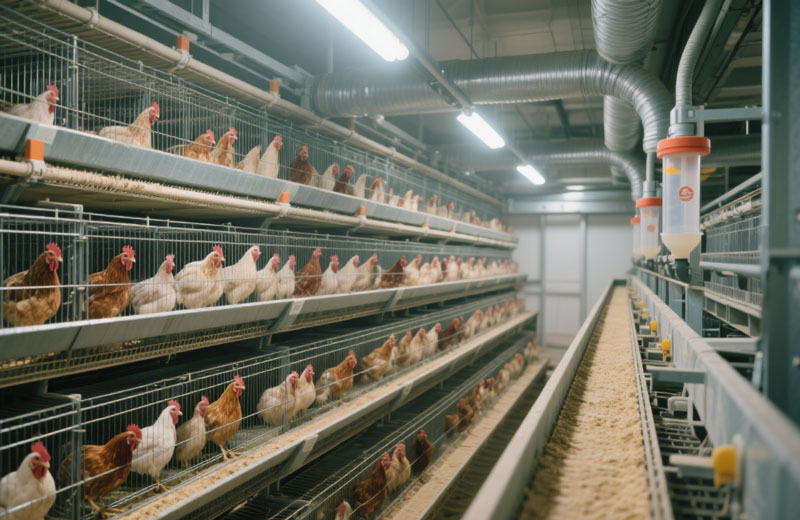
If you want to raise chickens, investing in a chicken cage is important for healthy chicken farming. Using a chicken cage not only increases land use rate and optimizes environmental control, but also increases chicken meat quality and reduces traditional livestock farming pollution. However, when it comes to the size of the chicken cage, it is challenging for beginners to choose the right size. In this post, we will help you know different chicken cage dimensions, guide you on how to choose the right chicken cage dimension, and provide you with a customized solution.
What Are Chicken Cage Dimensions?
The growth of chickens requires a comfortable environment with sufficient space for their activities, which is vital for their healthy development. The cage length is usually 1.5-2.5 m. The width is usually 0.8-1.5 m. The height is usually 1-1.5 m. Such a size not only meets the chicken’s normal activities demand, but also their comfort.
Different sizes affect the growth and development of chickens, ventilation, cleanliness and production performance.


- Layer Cage: Each compartment can hold 2 to 4 chicken; the entire set can accommodate 96 to 160 chicken; the number of layers is 3 to 5.
- Broiler Cage: The cage is wider and lower, facilitating rapid growth and release.
- Pullet Cage: The space is small and the density is low, which is suitable for the growth stage of chicks.
| Cage type | Tier | Cage Size(L×W×H, mm) | Birds per Set | Birds per Cell |
| Layer cage | 3-5 | 1950 × 350 × 380 | 96-160 | 4 |
| Broiler Cage | 3-5 | 1800 × 420 × 400 | 96-120 | 3 |
| Pullet cage | 3-4 | 1500 × 300 × 350 | 108-144 | 6 |
Effects of different chicken cage dimension on chickens
1. Affecting growth and development
The growth and development of chickens need a comfortable environment. Sufficient space for activities is important for healthy chicken farming. If the chicken cage is smaller, the activity space for chickens will be limited, resulting in them being unable to perform normal activities such as stretching and running. This not only influences the growth speed but also hinders its physical development, leading to the chicken having a smaller body size or poor development.
2. Resulting in healthy problems
- Joint problem: A too-small chicken cage may lead to the chicken experiencing problems such as joint stiffness and difficulty in walking and standing due to maintaining the same posture for a long time.
- Mental health: the chicken that stays in confined spaces for a long time may feel depressed and uneasy. This unhealthy mentality may impact health.
- Pathophoresis: If the chicken cage is too crowded. The chickens will have more frequent contact with each other, which increases the risk of disease transmission.
3. Affecting egg production quantity
For hens, the dimensions of their chicken cages also affect the quantity of eggs produced. A too-small chicken cage may cause the hen to feel uneasy, thereby interfering with its normal physiological functions and leading to a decrease in both egg production quantity and quality.
4. Affecting welfare and behavior
- Loss of benefits: a too-small cage could limit the natural behavior of chickens, thus reducing their benefit.
- Abnormal behavior: in the small space, the chickens exhibit abnormal behaviors such as pecking at their feathers or anus. These actions not only affect the health of the chickens, but also may reduce their production performance.
Factors Affecting Chicken Cage Dimensions
1. The breeds and sizes of chickens
There are significant differences in body size among different breeds of chickens. The body is different, and choosing a chicken cage dimension is different.
- Layer chickens: Each chicken should occupy a floor area of ≥ 450 cm². The cage depth is recommended to be 40 – 50 cm, which is convenient for the chickens to turn around.
- Broiler chickens: Due to its fast growth rate and large size, each bird requires a cage area of at least 600 cm², and the cage height should be no less than 35 cm.
2. Aquaculture scale of chicken


| Scale | Chicken cage selection | description |
| 1-10000 | Single-layer or double-layer A-type chicken cage | Convenient for manual feeding and manure removal |
| 10000-50000 | Three to four tiers of A-type or H-type cages | the spacing between cages and the width of the passageways need to be increased to 900–1200mm. |
| >50000 | H-type multi-layer cage | The system can reach a height of 3.5 to 6 meters and requires the installation of an automatic manure removal and ventilation system. |
3. Ventilation and Space Utilization
The more layers there are, the greater the ventilation resistance at the top will be. So, Ventilation systems for cages with more than 4 layers must be equipped. Each layer should keep 55 – 65 cm, ensuring air circulation. A cage that is too deep can easily hinder the flow of air, especially in an H type chicken cage. Generally, the depth of the cage should be controlled between 400 and 450 mm. The spacing between cages should be at least 90-120 cm to allow for walkways or ventilation channels. A type chicken cage is more suitable for natural ventilation, while H Type chicken cages need to be paired with longitudinal or lateral forced ventilation systems.
4. Flock density and layer height
- Layer chicken stocking density: The stocking density per square meter is ≥ 30, and the stocking capacity of a single building can reach over 50,000. Floor height design: The height of a single layer is usually 30 centimeters, and when multiple layers are stacked together, the total height can reach up to 160 centimeters.
- Broiler flock density: No more than 20 per square meter. During hot seasons, the density should be appropriately reduced. Floor height design: The height of a single floor is generally 32-38 centimeters. The total height of a 4-tier stacked cage is approximately 1.6 meters.
- Automatic feeder requires space to accommodate the feeding troughs, conveyors or spiral conveyors. The width of the cage may be increased to accommodate the feeder, and the layout of the cage may need to be aligned with the feed delivery line to achieve efficient feeding. When planning the width of the cage, make sure that each bird has at least 15 to 20 centimeters of space for feeding.
- A cage with a scraper conveyor belt needs to leave space below the cage. The height of the cage may increase. The spacing between each layer may need to be adjusted so that the manure conveyor belt can move freely. At least 25 to 30 centimeters of space should be left below the cage for the waste collection system.
- The egg conveyor belt or the tray that rolls out requires an appropriate bottom slope and front space. Set the ground slope to incline towards the collection conveyor belt by 7 to 10 degrees.
How to Choose the Right Chicken Cage Dimensions?
Before choosing the chicken cage, please confirm your poultry farming objectives. Are you raising laying hens, broiler chickens, or chicks? Are you pursuing small-scale or large-scale business breeding? Different chicken cage systems are designed for specific purposes.
Although choosing cheap cage looks like tempting. But investing a high-quality cage may be bring perfect performance and reduce long-term cost. Please consider the total cost of owning a cage, including installation, operation and maintenance costs.
Custom Chicken Cage Dimensions
AGICO could calculate the total number of cages and the total area according to your site planning and the number of chickens. We offer a one-stop customized service.
We determine the size of the chicken cages and the distance between them based on the breed and quantity of the chickens you raise, in order to ensure that the chickens have sufficient space to move around.
Our chicken cage choose duriable and anti-corrosion materials to ensure the stability and safety over a long period of use.
Our chicken cage adopts automatic feed, cleaning manure, and collects eggs. It is also equipped with certain insulation functions, including protection from wind and rain, to ensure the comfortable growth of the chickens. Our chicken cage design is convenient for cleaning and disinfection, which helps to reduce the growth of bacteria and maintain the health of the chickens.
AGICO Poultry Equipment Solutions
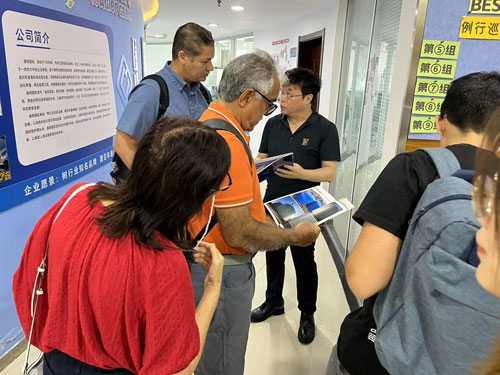
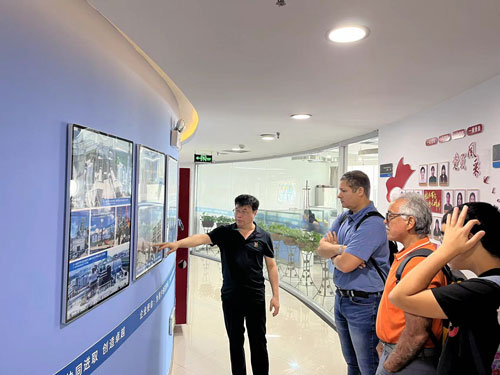
AGICO’s cage has excellent quality and craft. Core components are guaranteed for 1 year.And all of our products are certified with ISO and CE standards to ensure quality. We provide reliable protection for your chicken industry.
AGICO has 20 years of experience in poultry cages, has exported to 80 countries, and is distinct. And our company focuses on product optimization, which can efficiently solve various potential problems that may arise in the trade process.
AGICO provides a one-stop service and provides a complete raising chicken equipment solution, supporting customized chicken cage dimensions.
Conclusion
Choosing suitable chicken cage dimensions is important for high-efficiency raising of chickens. By considering the size, quantity, scale of breeding, budget, and whether automated equipment is equipped, etc., of chickens, AGICO could provide a comfortable and healthy environment for your chickens. Choosing a suitable chicken cage design to maximize space utilization, enhance production efficiency, and ensure the health of the chicken flock.
